The Islamic University of Madinah: a global crossroads of scholarship
Ten kilometres west of the Prophet’s Mosque, a campus where students from every inhabited continent live, learn, and carry Medina’s educational heritage back to their homelands.
The Royal Decree of 1961
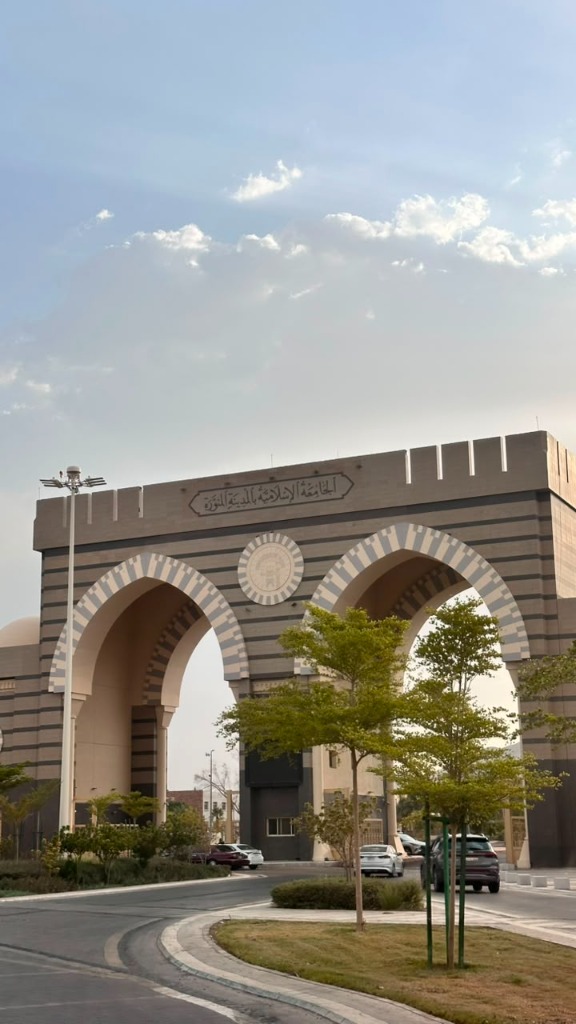
The Islamic University of Madinah was established by royal decree issued by King Saud bin Abdulaziz in 1961 (1381 AH). From its very inception, the university was conceived not merely as a domestic college, but as an international gift from the Kingdom of Saudi Arabia to the global Muslim world — an institution dedicated to transmitting Islamic theology, jurisprudence, Arabic language, and Quranic recitation to learners from across the globe.
Its campus was deliberately placed along the western boundary of Medina, skirting the lush palms and volcanic basalt beds of Wadi al-Aqeeq — the "blessed valley" praised in traditional accounts.
A Global Crossroads on the Banks of Al-Aqeeq
What makes the Islamic University genuinely unique among the world’s higher education institutions is the extraordinary diversity of its student body. Students from more than 170 countries and hundreds of distinct ethnic and linguistic communities live side by side in campus residences.
More than eighty percent of enrolled students are international scholarship recipients. In the dining halls, lecture amphitheatres, and leafy walkways between classes, one hears discussions flowing effortlessly between Arabic, Hausa, Indonesian, Urdu, French, and English, unified by a shared scholarly purpose.
From Classical Sharia to Modern Engineering
While founded upon legendary faculties — the College of Sharia (Islamic Law), the College of the Holy Quran, the College of Noble Hadith, the College of Da’wah, and the College of Arabic Language — the university has evolved into a comprehensive modern academic powerhouse.
Over the past two decades, cutting-edge faculties in Computer Science, Applied Sciences, Engineering, and Business Administration have been established. This balanced curriculum ensures that graduates leave not only grounded in ethics and heritage, but equipped with the technical skills needed to build modern societies.
Campus Life, Bin Baz Mosque, and the Central Library
At the physical and spiritual heart of the campus stands the grand Bin Baz Mosque, named after the prominent scholar and former university rector Shaykh Abdul-Aziz ibn Baz. Fronted by palm groves and manicured gardens, the mosque fills with thousands of students and faculty for daily prayers.
Nearby, the university’s Central Library houses hundreds of thousands of volumes, doctoral dissertations, and rare manuscripts, acting as one of the premier bibliographic repositories in western Saudi Arabia.
Visiting the University on Our Route
Located along Prince Naif Ibn Abdulaziz Road, the university lies along the route of our Madinah Heritage Tour. While administrative areas and student residential quarters require university permits, the expansive perimeter, grand entrance gates, and surrounding parks along Wadi al-Aqeeq provide visitors with a panoramic view of modern educational Medina.