Qiblatain: the mosque where the direction of prayer changed
The second mihrab was removed in a 1980s renovation. Knowing that before you arrive changes what you look for.
For roughly the first sixteen months after the migration, Muslims in Medina prayed facing Jerusalem. In the year 2 after the hijra, a revelation directed them to face the Kaaba in Mecca instead. The account attached to this mosque — then the mosque of the tribe of Banu Salamah — is that the instruction arrived during a prayer, and the congregation turned where they stood, completing what they had begun in one direction facing the other.
Whether the turn happened in this mosque specifically is discussed by historians, and the traditions are not unanimous. What is not in dispute is the change itself, or that this building has been associated with it for centuries.
What changed, and why it mattered
A direction of prayer is not a small administrative detail. It orients every mosque built afterwards, every daily prayer, and the burial of the dead. Turning from Jerusalem to Mecca gave the young community in Medina its own centre of gravity, distinct from the two older traditions it lived among.
The missing second mihrab
For a long time the mosque contained two prayer niches — the working one facing Mecca and a second, sealed, facing north towards Jerusalem. That pair is what gave the building its name, and it is what most visitors arrive expecting to see.
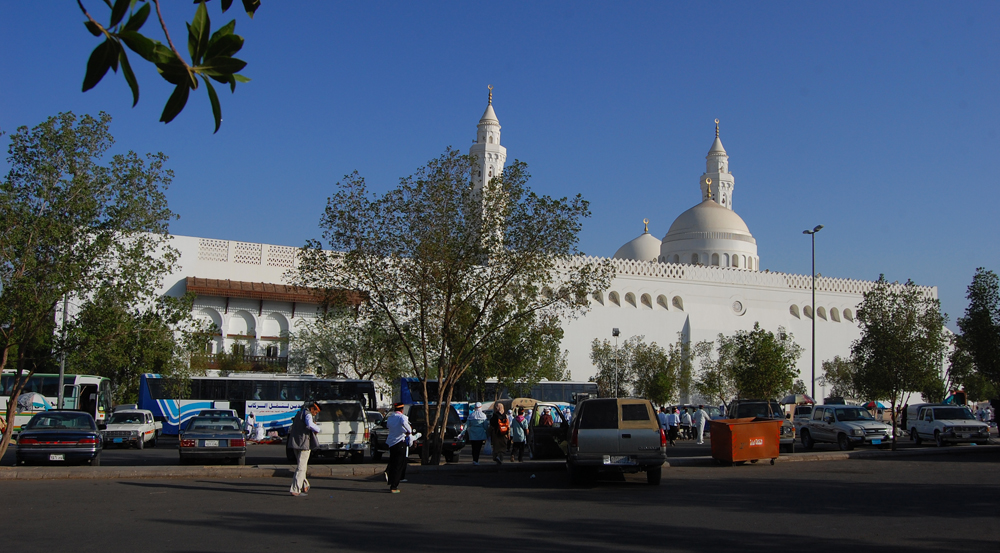
In the renovation completed in 1987 the northern niche was removed. The mosque today is a clean, twin-domed white building with a single mihrab, and nothing inside it announces the event it is named for. Guides who do not mention this leave visitors quietly searching a wall for something that is no longer there.
Visiting
Qiblatain sits northwest of the centre, on higher ground with a clear view back across the city. It is the third stop on the Basic Madinah Tour, twenty-five minutes, which is the right length: it is a small mosque and the story is the reason to come.