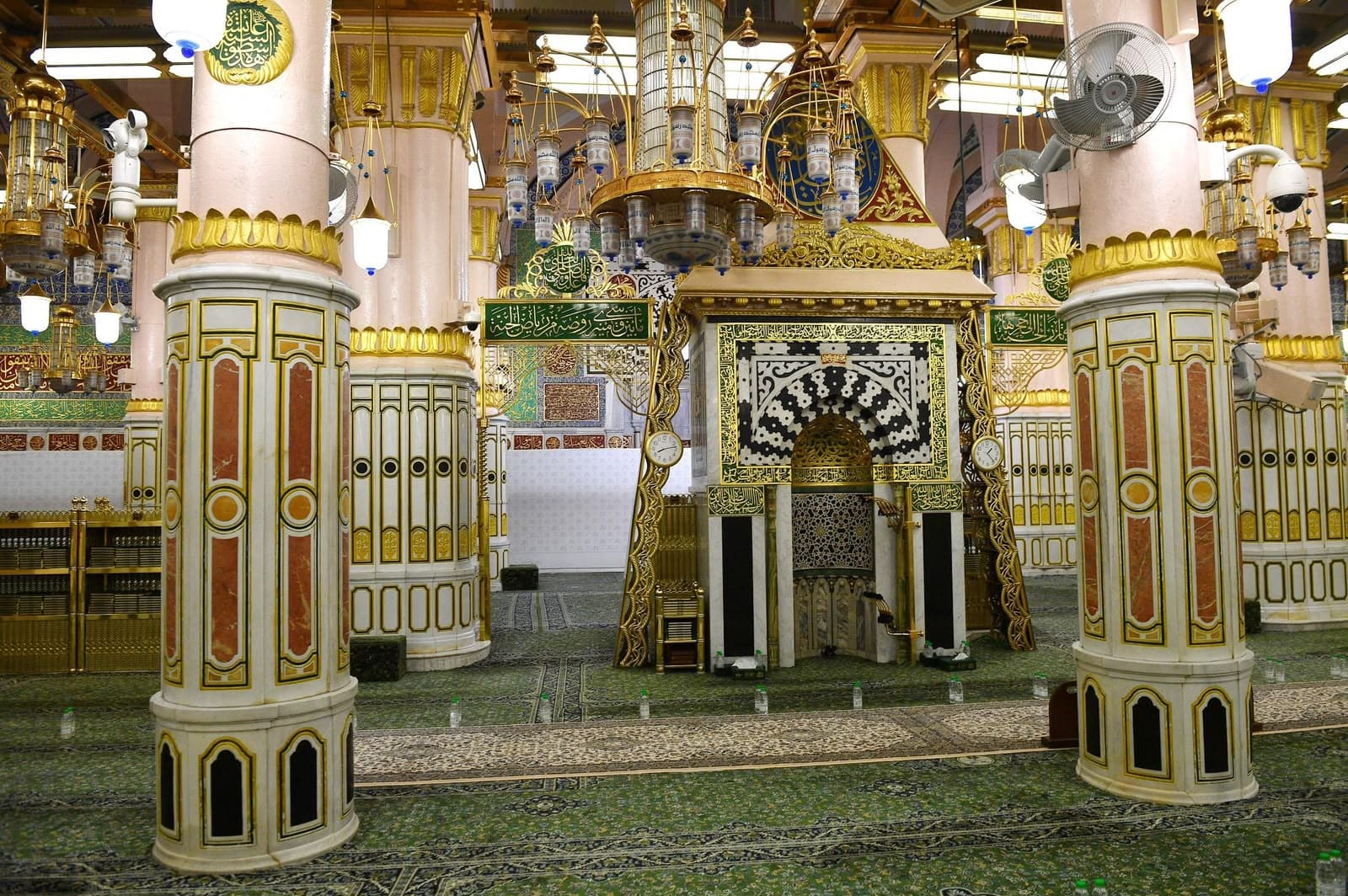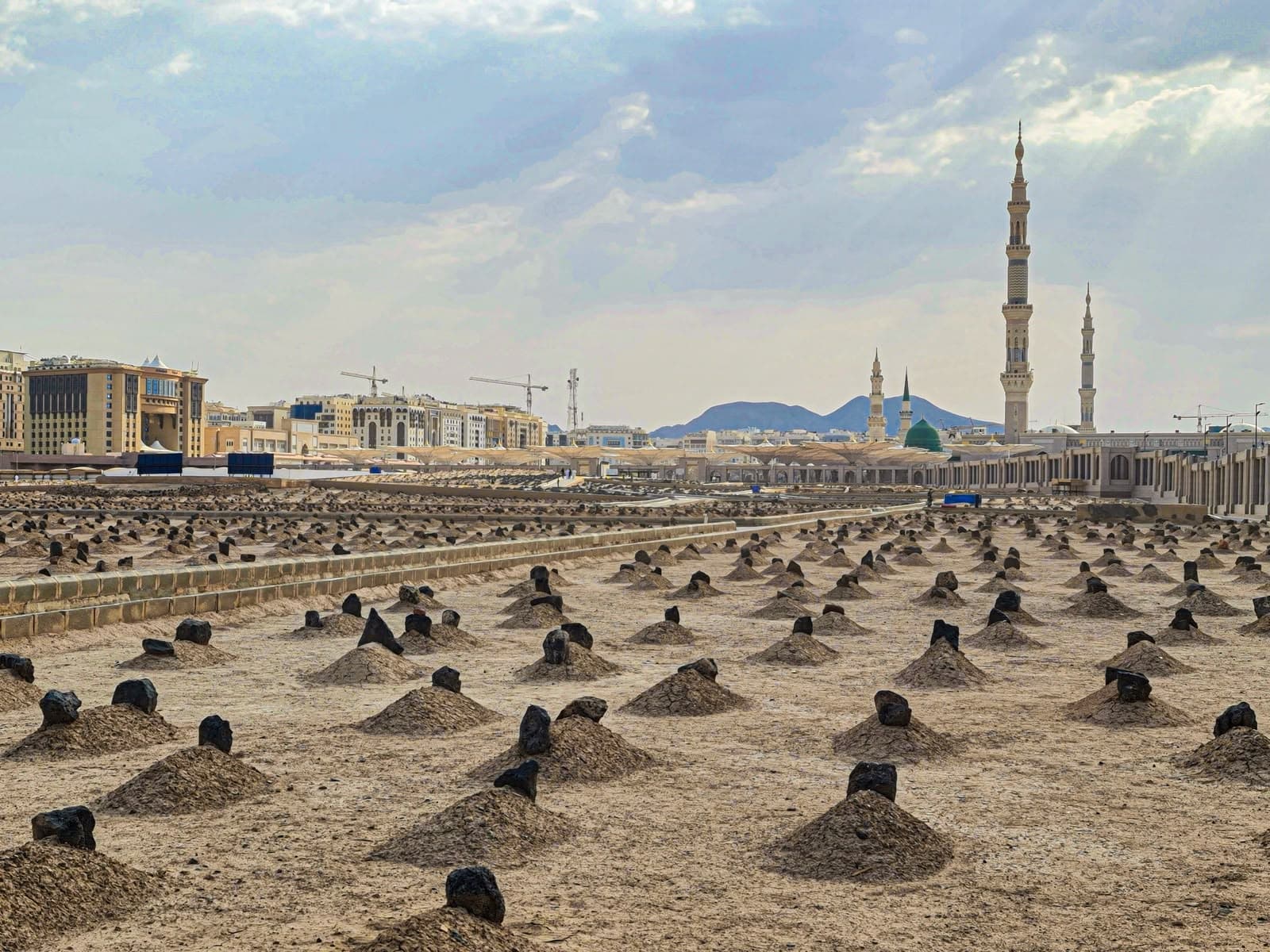
Quba Mosque: the first mosque in Islam
Most visitors reach Quba in ten minutes and leave in twenty. It rewards longer.
When the Prophet ﷺ completed the migration from Mecca in 622, he did not go straight into the city. He stopped at Quba, then a settlement on its southern edge, and stayed several days. What he built there during that pause is the first mosque in Islam, and it is still in use every day of the year.
That sequence is the thing worth holding on to. Before a state, before a treaty, before a single institution of the new community, there was a place to pray built by hand out of palm trunks and stone.
What you are actually looking at
Almost nothing of the original structure survives above ground. Quba has been rebuilt and extended many times across fourteen centuries — by the Umayyads, by successive Ottoman restorations, and most recently in a major expansion completed in the 1980s to a design by the Egyptian architect Abdel-Wahed El-Wakil.
It is worth saying that plainly, because the disappointment people describe usually comes from expecting a seventh-century ruin and finding a working mosque in white stone with six domes and a courtyard. The continuity here is not in the masonry. It is in the fact that the site has never stopped being what it was built to be.
Two rak’ahs at Quba
A well-known hadith records that whoever purifies himself at home, then comes to the Mosque of Quba and prays two rak’ahs there, has a reward like that of an umrah. It is the reason the car park fills on a Saturday morning and the reason many visitors make the short journey out from the centre before doing anything else in the city.
Practically: come early or come late. Between the mid-morning coach arrivals and the hour before Dhuhr the courtyard is at its busiest, and the calm that makes the visit worth making is easier to find outside those windows.
On our route
Quba is the second stop on the Basic Madinah Tour, about fifteen minutes after hotel pickup, and we allow thirty-five minutes there. That is enough to pray unhurried, walk the courtyard, and hear how the settlement related to the city before the two grew together — which is the part that makes the rest of the day legible.