Rare Manuscripts Collection at the Library of al-Masjid al-Nabawi
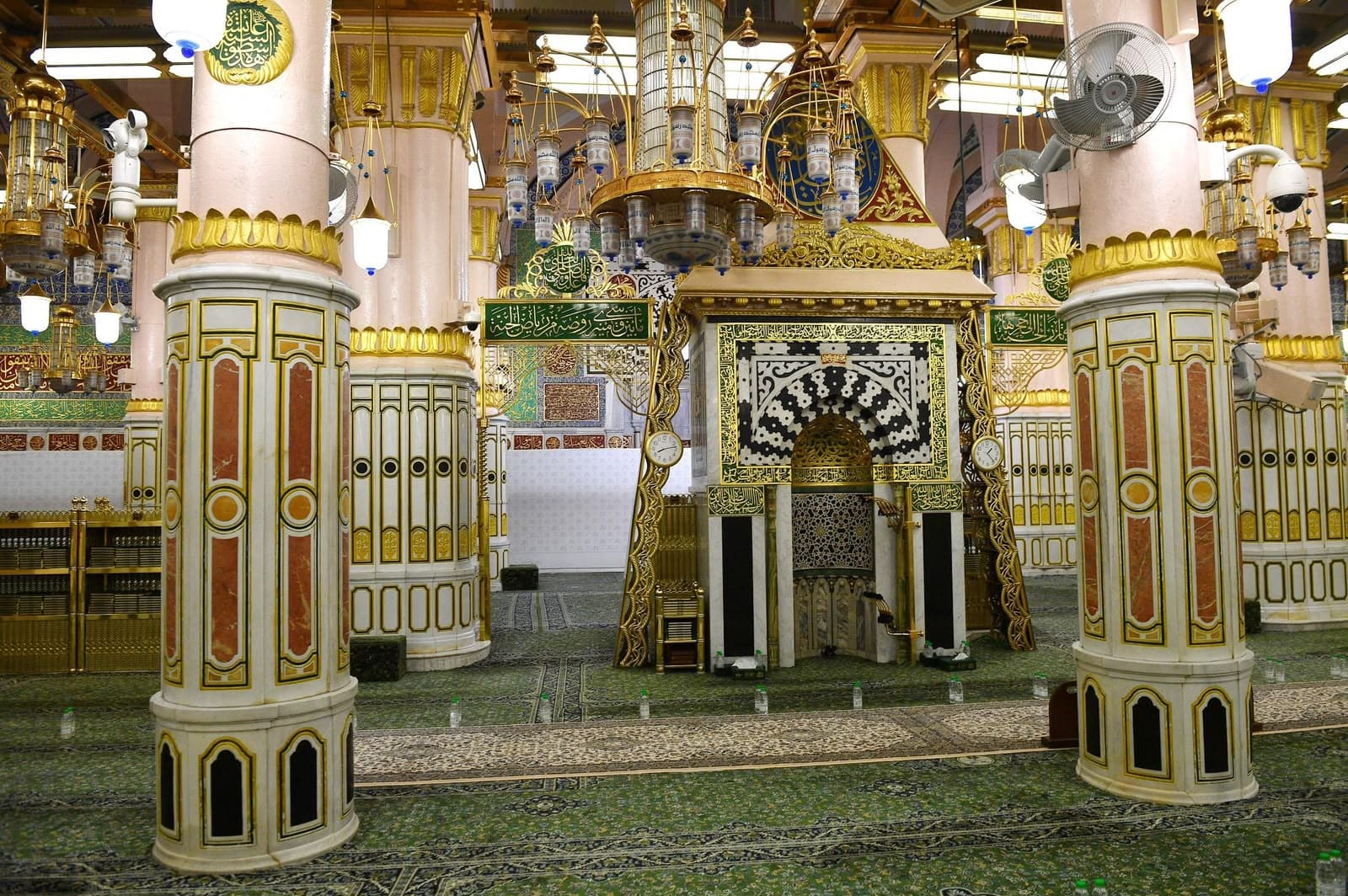
Standing in the Prophet's Mosque library, surrounded by centuries of handwritten heritage, is an experience that connects visitors to the living tradition of Islamic scholarship.
The "Rare Manuscripts Collections at the Library of al-Masjid al-Nabawi" exhibition stands as a prominent cultural and heritage showcase in Madinah, taking visitors on a journey through time to explore unique Islamic treasures that document a magnificent aspect of the history of Islamic sciences and writing.
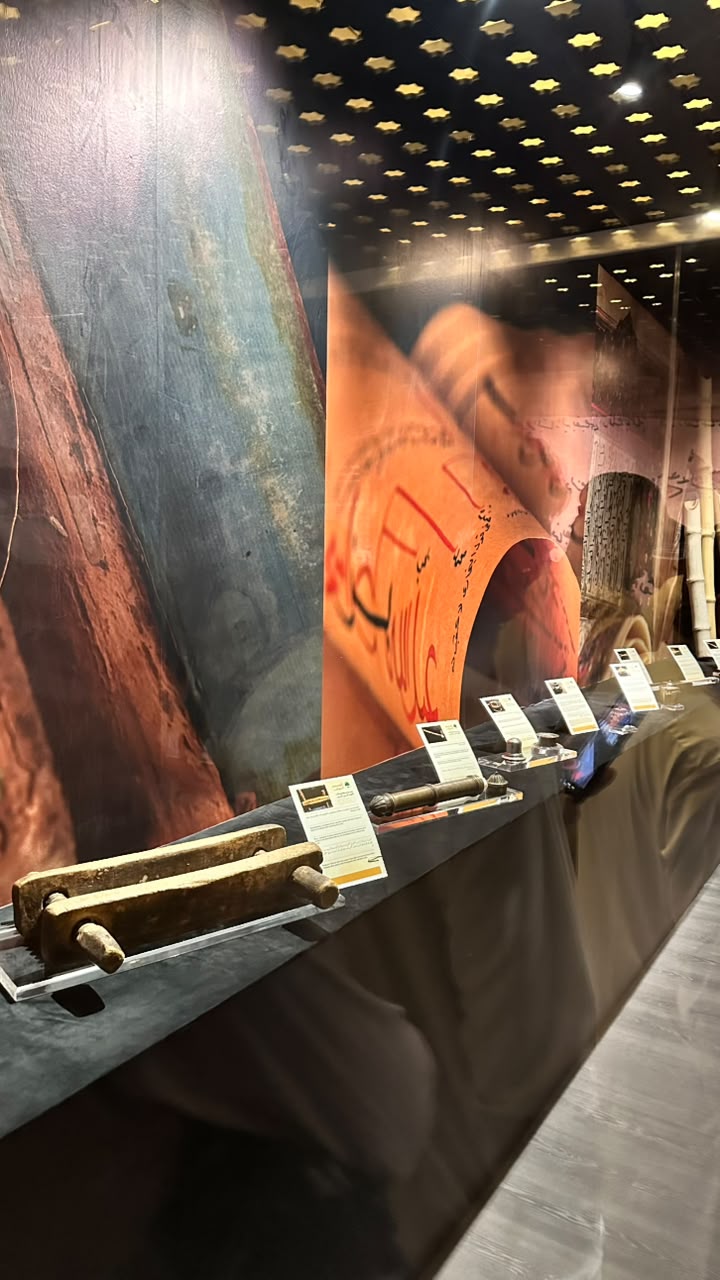
The exhibition features carefully preserved rare artifacts and manuscripts that reflect the diverse writing materials used by Muslims across different eras, showcasing the immense care dedicated by the General Authority for the Care of the Affairs of the Grand Mosque and the Prophet's Mosque in preserving and maintaining Islamic heritage.
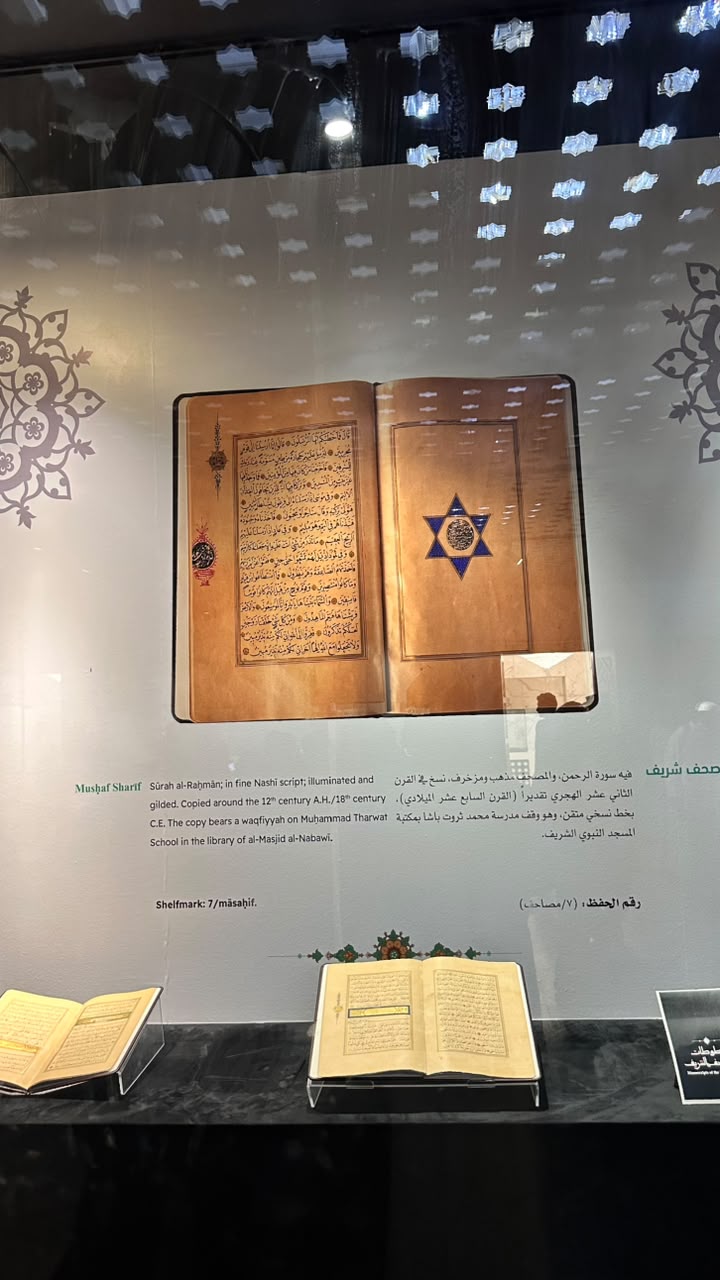
Early Quranic Parchments
Among the most precious exhibits are early Quranic parchments — noble Quranic verses written with skill and precision on parchment (thin leather), representing early and important stages of documenting the Holy Quran. These manuscripts demonstrate the extraordinary calligraphic skills and dedication of early Muslim scribes who preserved the divine words with meticulous care.
The fine Nashi script used in many of these manuscripts reflects the evolution of Arabic calligraphy and the standardization of Quranic writing during the formative period of Islamic civilization. Each parchment tells a story of devotion, precision, and the sacred duty of preserving divine revelation.
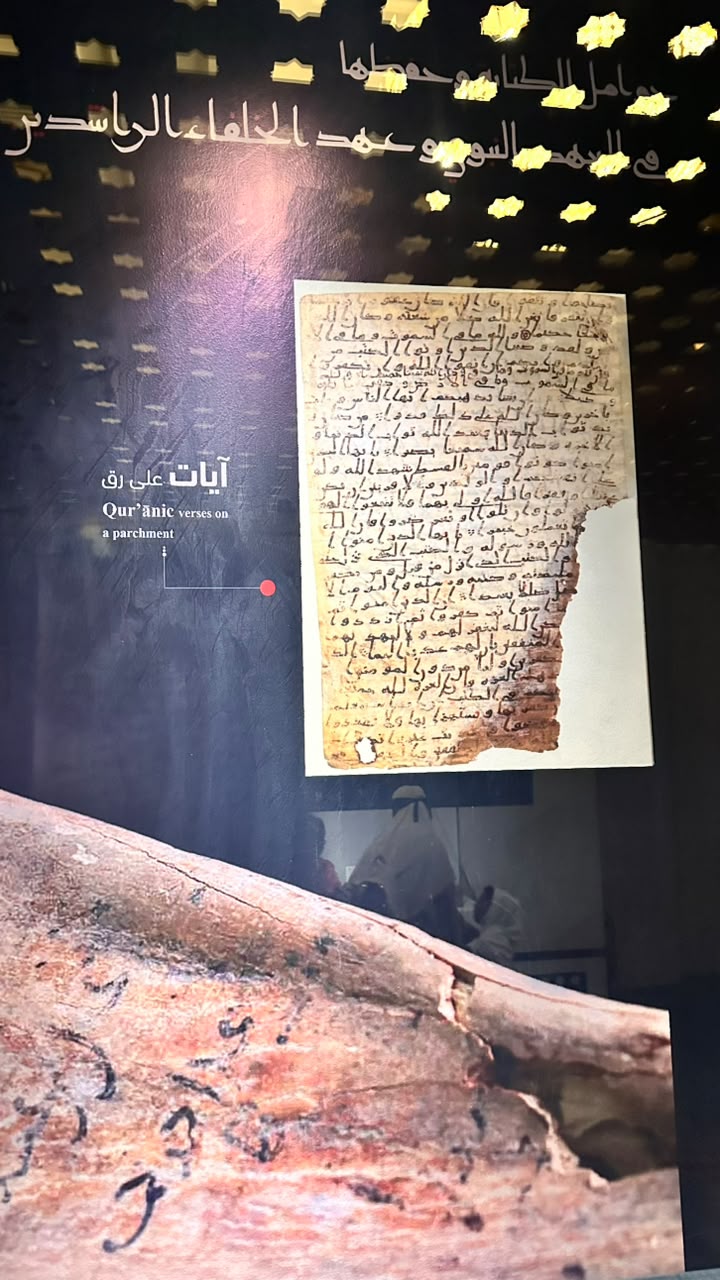
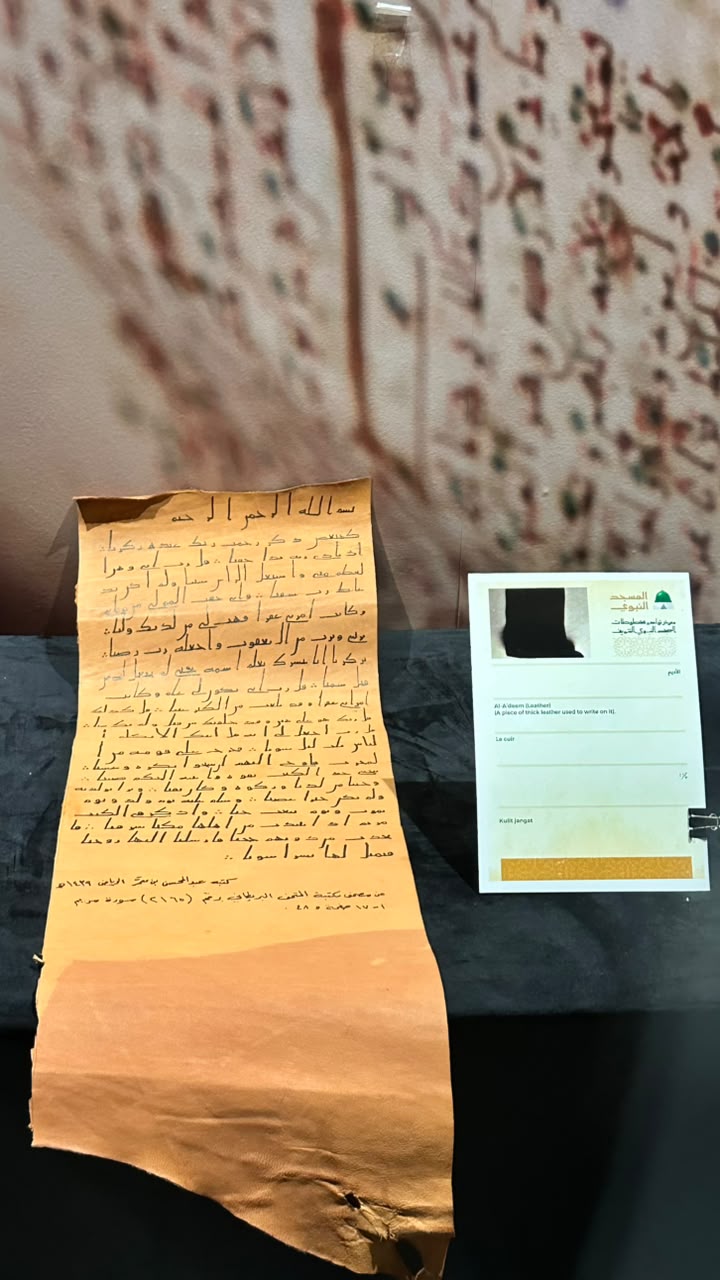
Writings on Al-Adeem (Thick Leather)
The exhibition includes remarkable examples of writings on Al-Adeem (thick leather), including a manuscript containing verses from Surah Maryam (verses 1 to 28) documented in authentic Arabic scripts. These thick leather pieces represent an important medium for writing before paper became widely available in the Islamic world.
The durability of leather as a writing material ensured that these manuscripts survived centuries, providing modern scholars with direct access to early Islamic textual traditions. The craftsmanship evident in these pieces speaks to the resourcefulness and artistry of early Muslim civilization.
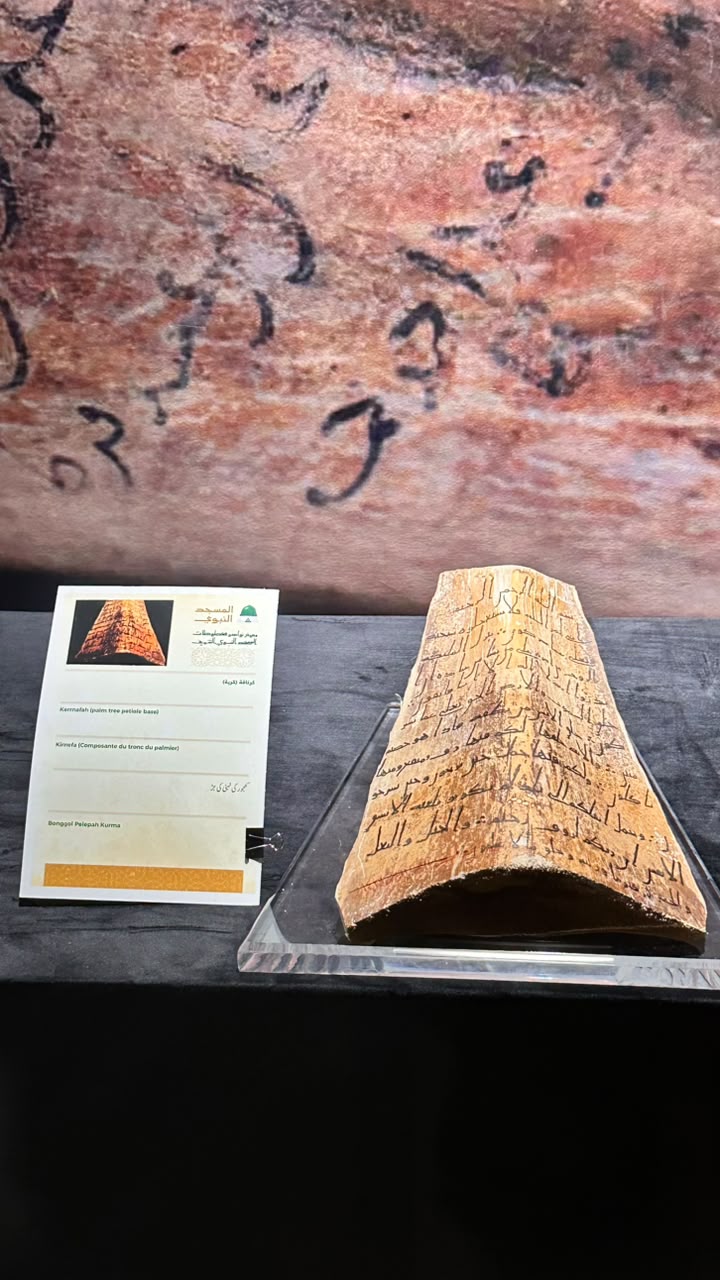
Writing on Palm Tree Petioles (Karnafah)
Perhaps the most unique exhibits are the writings on palm tree petioles (Karnafah) — a remarkable model of writing on palm tree frond bases where verses clearly appear on the fibrous and woody nature of the palm parts. This reflects the ingenuity of ancient available methods and the adaptation of writing to local materials.
These palm-leaf manuscripts demonstrate how early Muslim communities utilized available natural resources for the preservation of religious and scholarly texts. The skill required to write clearly on such uneven surfaces speaks to the dedication and expertise of ancient scribes.
Historical Legal and Scientific Manuscripts
The exhibition also features historical legal and scientific manuscripts, such as the commentary by Sheikh Abdul-Aziz ibn Muhammad al-Aqba'i al-Wafa'i al-Shafi'i, copied in the hand of Mansour al-Saja'i in 984 A.H./1567 C.E. These works highlight the precision of legal and linguistic sciences and their transmission across generations of Islamic scholarship.
These manuscripts serve as testaments to the intellectual rigor and scholarly traditions that flourished in Islamic civilization. They provide insight into the methodologies of Islamic jurisprudence, linguistics, and the systematic approach to knowledge preservation that characterized Muslim scholarly communities.
The Civilizational Role of the Exhibition
Beyond displaying rare pieces, the exhibition aims to highlight the immense care dedicated to preserving Islamic heritage. It serves as an ideal destination for researchers, students of knowledge, and visitors of Madinah eager to dive deep into Islamic history and witness its material evidence firsthand.
The exhibition represents a bridge between past and present, allowing contemporary visitors to connect with the scholarly traditions and material culture that shaped Islamic civilization. It is not merely a display of artifacts, but a living testament to the continuity of Islamic learning and preservation.