The Seven Mosques: the trench, and why there are six
The one stop on the route that explains a siege rather than a battle.
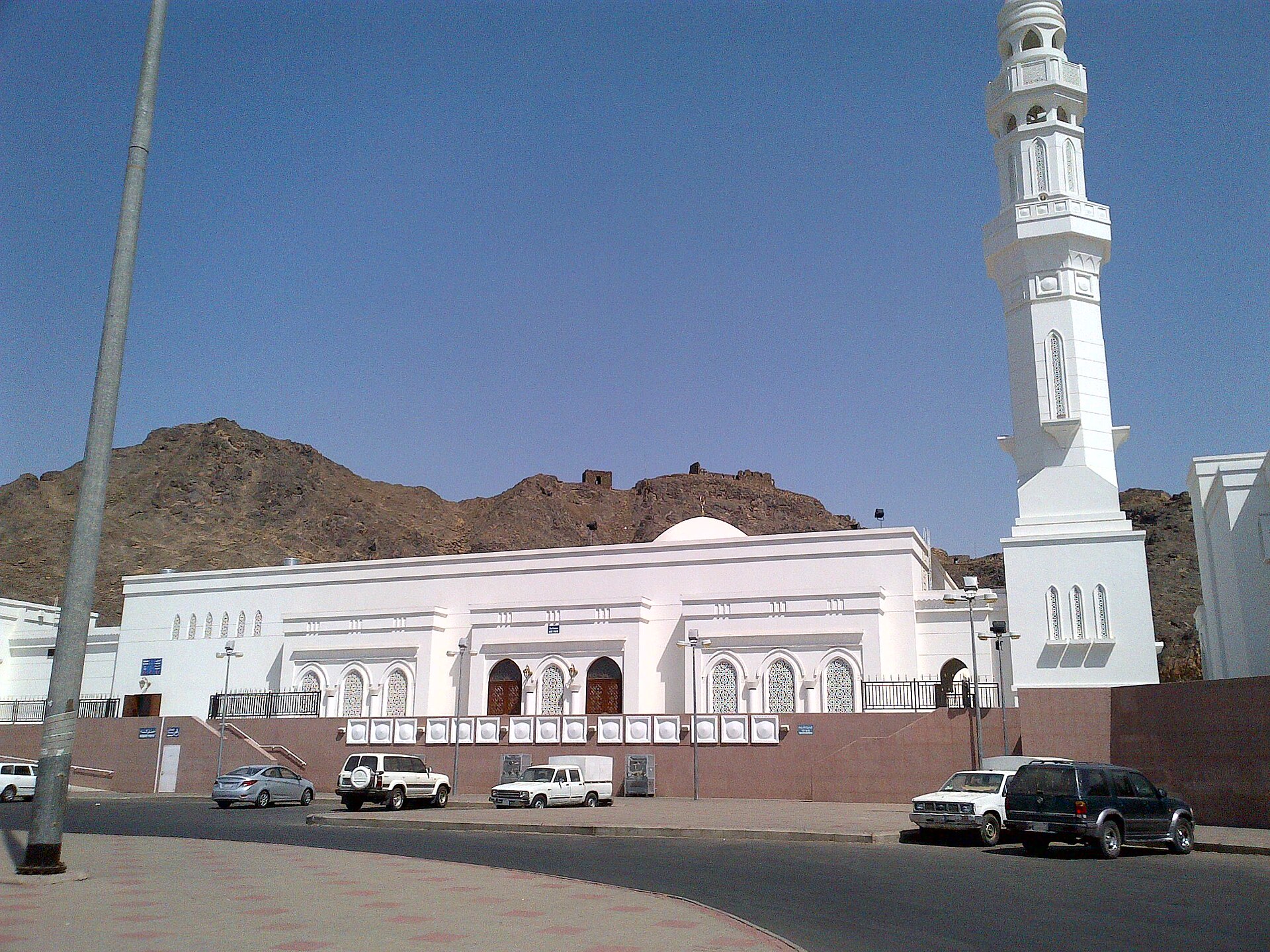
The Seven Mosques stand on the western side of Medina, a couple of kilometres from the Prophet’s Mosque and a few minutes from Qiblatain, at the foot of the dark ridge of Mount Sal‘. They are small buildings on a small piece of ground, and the whole site can be walked in a quarter of an hour.
There is not much to look at, and that is the usual reason visitors are driven past them. What the ground carries is a siege: this is the line of the trench that was dug across the northern approach to the city in the fifth year after the migration, and the mosques mark where the men who defended it stood.
The trench
In the year 5 after the migration a coalition of Meccan tribes and their allies moved on Medina with a force the city could not meet in open battle. The Qur’an names them al-Ahzab, the Confederates, and gives its thirty-third chapter their name.
Medina was hard to enter from most directions — lava fields to the east and west, packed housing and palm groves to the south — but the north was open. On the advice of Salman al-Farsi, a Persian companion who knew the tactic from his own country, a trench was dug across that side. Cavalry could not cross it, and cavalry was what the coalition had.
The siege lasted weeks and never became a general engagement. Cold, dwindling supplies and division inside the coalition did the work, and the army broke up and went home. It is the campaign Medina won by digging, which is why the ground matters more here than any building on it.
Seven mosques, six buildings
The largest is Masjid al-Fath, also called al-Ahzab and al-A‘la, the high one, on the rise where a dome was put up for the Prophet ﷺ during the siege and where he prayed. Around it are smaller mosques, each attached to a companion: Abu Bakr, Umar, Ali, Salman al-Farsi, Sa‘d ibn Mu‘adh.
The names mark position rather than authorship. The buildings went up during the governorship of Umar ibn Abd al-Aziz, the best part of a century after the siege, and they have been restored repeatedly since; the attribution is to where a man is said to have stood on the line, not to who laid the stones.
Which leaves the count. There are six, and there always were. The Heritage Commission’s own sign at the site sets out the two explanations historians offer: that the seventh was the mosque of Bani Haram, which was later rebuilt, or that it is Masjid ar-Rayah on the neighbouring rise, near enough to the trench to be counted with the group. Neither is presented as settled, and a guide who tells you the seventh was demolished last year is guessing.
What is there now
The site has been rebuilt more than once, most recently on a far larger scale, and a big modern mosque now dominates it. The small structures are not all in the state, or the use, that photographs from ten years ago show. If you want to see a particular one, ask first rather than plan the afternoon around it.
Nothing is prescribed here. There is no prayer particular to the site, nothing to touch, and no basis at all for the idea — offered often enough by drivers with an afternoon to fill — that a visitor should pray two units in each of the seven. If you arrive at a congregational prayer, it is an ordinary prayer in an ordinary mosque, which is the correct amount of ceremony.
Visiting
Fifteen to twenty minutes is enough, and the stop belongs with Qiblatain, which is minutes away on the same side of the city. Both are on the Basic Madinah Tour, between Quba in the south and Uhud in the north. Late afternoon is the light worth having: the ridge behind the site is the photograph, not the buildings. Dress as for any mosque, and avoid the middle of a summer day — there is very little shade on that ground, which was rather the point of it.