Shopping in Medina: malls, markets and what things cost
The shortest useful rule: buy near the Haram for convenience, walk ten minutes out for price.
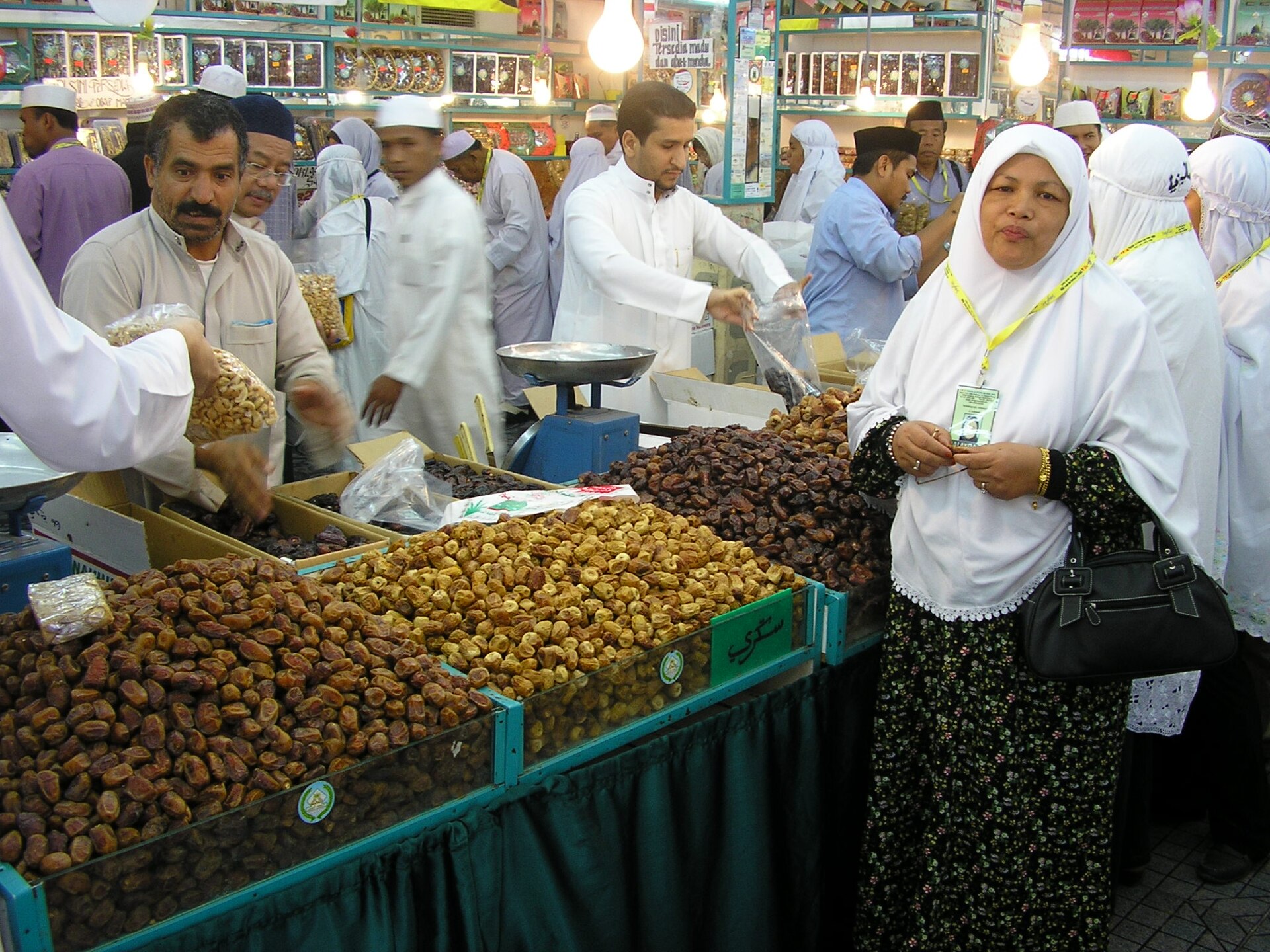
Almost everyone who comes to Medina buys something to take home, and almost everyone buys it in the last two hours before leaving, from whichever shop is nearest the hotel. This is a guide to not doing that.
Prices below are broad ranges in Saudi riyals, given so you know when you are being quoted something reasonable. They move with the season — Ramadan and the Hajj period push everything up — so treat them as orientation rather than a price list.
The malls
Al Noor Mall is the one most visitors mean when they say the mall: international brands, a large abaya and perfume section, a food court on the upper floor and an arcade that will buy you an hour of peace if you are travelling with children. Al Rashid Mega Mall is the other big one, similar in range, with a wider food selection including the fast food Saudi families actually eat.
Malls are fixed-price. You will not haggle and you should not try. What you get is air conditioning, clean facilities, prayer rooms, card payment everywhere and the certainty that an electronics item or a branded abaya is what it says it is.
The markets near the Haram
The commercial centres ringing the Prophet’s Mosque — Taibah among the best known — are where most pilgrims shop, because they are a two-minute walk from the gate. Prayer mats, caps, attar and oud, dates, tasbih, scarves, children’s clothes, and a great deal of luggage in every size, because everyone underestimates what they will be carrying home.
Haggling is normal here and expected on anything without a printed price. A reasonable opening move is to ask for the best price rather than to name one, and to be ready to walk; there are four shops selling the same thing within fifty metres, which is the whole of your leverage.
Where the prices actually drop
Ten minutes out from the Haram, in the ordinary commercial streets and the markets nearer Quba, the same goods cost noticeably less. The mark-up immediately around the mosque is real and it is not a scandal — it is rent. But if you are buying five kilos of dates or six prayer mats for people at home, the walk pays for itself several times over.
This is also where the food gets better and cheaper, which is not unrelated: the shops that serve residents rather than visitors are the ones competing on price.
What to actually buy
Dates, first and last — Medina is the reason the word Ajwa means anything, and they travel well. Then attar and oud, which are genuinely better value here than at home and which you can smell before committing. Prayer mats and caps are everywhere and cheap. Zamzam water is sold in sealed five-litre containers and airlines have specific rules about it, so check with yours before you buy several.
What to be careful with: dates sold as Ajwa at a price far below everything around them are usually Safawi, a similar-looking dark date that is perfectly good but not the same thing, and electronics from a stall rather than a shop.