Where to eat in Medina: from a ten-riyal shawarma to a proper mandi
Budget 20 to 35 riyals a head and you will eat well. Spend more and you are mostly buying a tablecloth.
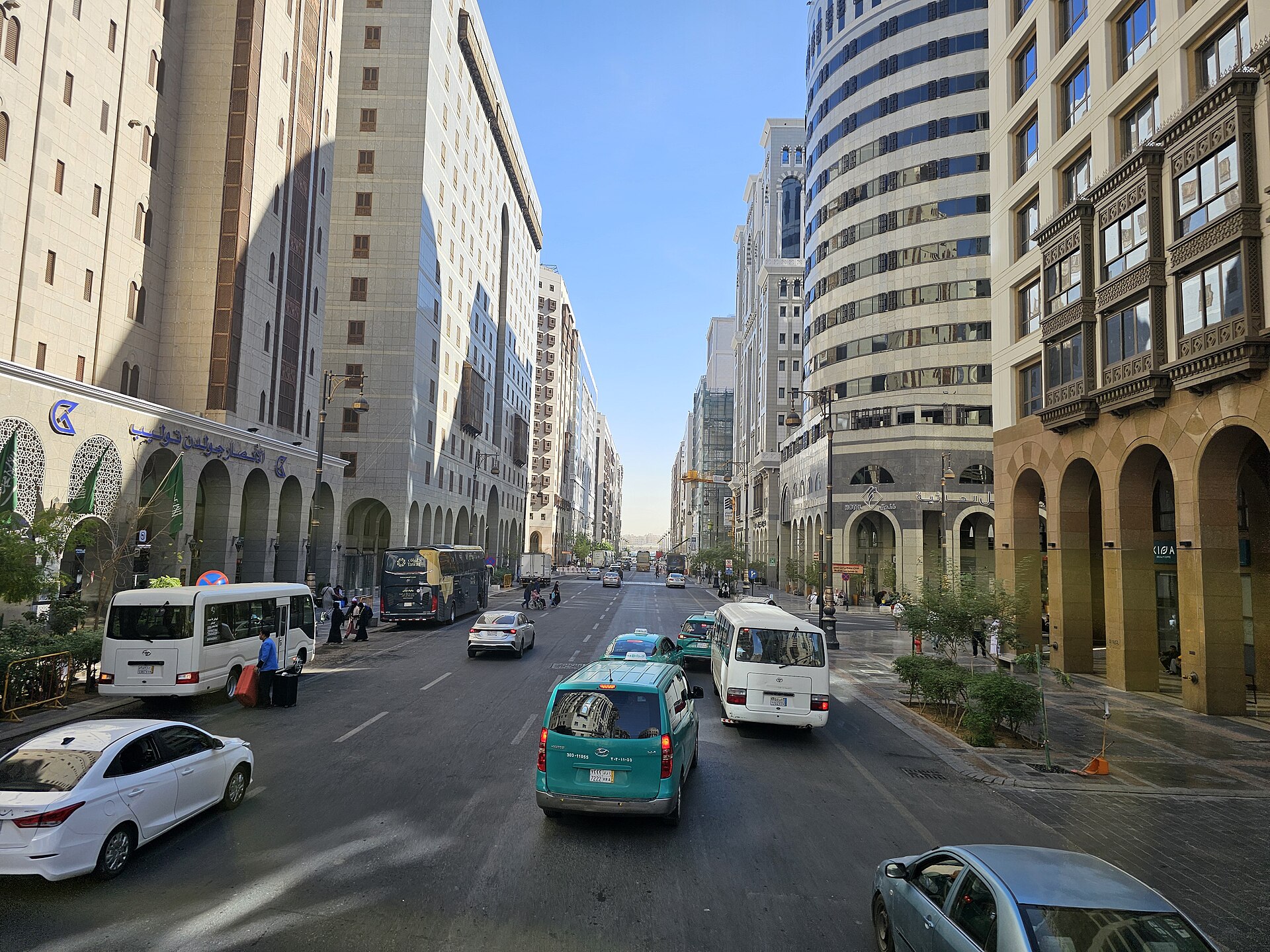
Medina feeds several million visitors a year from every part of the Muslim world, and the food reflects it: Saudi, Levantine, Egyptian, Turkish, Pakistani, Indonesian, all within a few streets. It also means the restaurants immediately around the Haram are optimised for turnover rather than for cooking.
What to order
Mandi and kabsa are the two dishes to eat here: rice cooked with lamb or chicken, served on a large shared platter, portioned for a family rather than a person. Expect roughly 25 to 60 riyals a head depending on the meat and the place, and expect too much food. Ordering one platter between three is normal and nobody will think anything of it.
Below that, shawarma is the reliable cheap meal — ten to twenty riyals, everywhere, and better from the busy stall than the quiet one. Al Baik, the Saudi fried chicken chain, is an institution rather than a restaurant and the queue is part of it. Lebanese places do shawarma, manakish and falafel for around 20 to 50 riyals a head and are usually the safest choice for a mixed group.
Walk away from the mosque
The single best piece of advice about eating in Medina is to go five or ten minutes further out than feels necessary. The restaurants that serve residents rather than pilgrims are cheaper, better, and busier at eleven at night than at eight in the evening.
A related point on timing: everything closes for each prayer, briefly, and reopens. Nobody eats early. If you turn up at seven expecting a full dining room you will find an empty one, and conclude wrongly that the place is no good.
Practicalities
All food in Saudi Arabia is halal and no alcohol is served anywhere, so neither needs checking. Most restaurants have a family section as well as a singles section; a mixed group or anyone travelling with women should ask for the family side. Card payment is near universal, tap water is not what anyone drinks, and bottled water is sold everywhere for a riyal or two.
On the Shopping and Leisure Tour we end at a traditional Madinah restaurant chosen on the day rather than booked in advance, because the right answer depends on the group, the hour and what is busy. That is not vagueness; it is the difference between eating where residents eat and eating where the coach parks.